
You have a test this week, so you lay out your set of highlighters, open your textbook (for what may be the first time), and embark on your mission to know every important detail for your test. This is a common experience and everyone seems to think that highlighting ‘key points’ in the text is essential to studying, but is it really as helpful as we think it is?

Our brains haven’t evolved to reward us for eating healthy foods or exercising. Can we engineer our own positive feedback loops to promote these behaviors using social media?

While Asian Americans are typically depicted as intelligent, high-achieving, and law-abiding, such stereotypes may not be as innocuous as you think. The Model Minority Myth has several consequences for the mental health, academic achievement, and institutional support (e.g., school and governmental programs) available to this population.

Adolescents who are evening-types tend to report several negative outcomes on a variety of measures compared to their morning-type counterparts.

“I don’t believe my brain!” Guests of all ages were shocked by the tricks their brains played on them during PIA’s Psychology and the Brain exhibition at UCLA’s 9th annual Explore Your Universe (EYU) science festival. The event brought in over 7,000 Lo …

Humans and non-human animals alike have to process and respond to specific information about their social environments in order to navigate the social world. But language seems to shape how we process and respond to such information. So are certain forms of social cognition uniquely human?

Somewhere along the way, we all started believing that if we want to come off as intelligent, we need to use big and flowerly language, and use it often. However, psychological research has investigated this assumption, and the results are surprising.

In my last article, I talked about epigenetics and how we can measure epigenetic changes (read here if you missed it). Now we’re moving on to the good stuff—how we assess epigenetic aging and what it means for biological and psychological research.Many …

Future intentions are difficult to remember. Luckily, we adapt by using external devices such as smartphones and calendars.

Measuring Chronological AgeAging is something that we all experience, but that we still struggle to understand. We know that aging is natural and allows us to mature, and is ultimately related to natural mortality. Many researchers have sought to devel …

At approximately 150 years of age, psychological science is an infant among elders. For someone like myself, this is precisely what makes psychological science so invigorating. We stand on the shoulders of giants in scientific history, but we are also in unchartered waters.
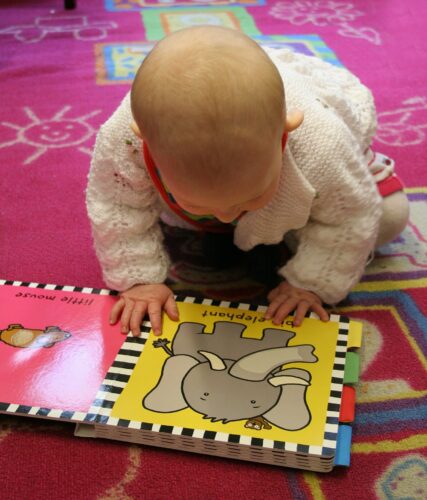
Infants learn an incredible amount in the first two years of life. But how can we investigate how and when infants learn about various aspects of the world around them?

Polyvagal TheoryIn the first article in this series (read here if you missed it!), we got an overview of the vagus nerve and its role in stress physiology. In this second article, we will go through the specific stages of the stress response in polyvag …

Everyone loves a good superhero story. Superheroes have been a fixture in American pop culture for decades, but in the past 10-15 years we’ve witnessed a resurgence of superhero mania. Between movies, TV shows, toys, and even national conventions, the …

What’s going on in the brain when someone does change their mind? Understanding neural systems underlying belief maintenance can bring scientists closer to communicating new research in a way that makes people more amenable to updating their beliefs.

“It’s too expensive to start the school day later.”“Extracurriculars will suffer if we start school later.”“We shouldn’t coddle teens by pushing school start times.”These are just some of the arguments against later school start times for teens. …

Up there with the Myers-Briggs Type Indicator is the ever-popular Learning Styles assessment. Such assessments are meant to measure which “way” we learn information best (e.g. visual, audio, etc.). Results indicate what type of learner you are, but what does empirical research have to say about learning styles?

“It’s hard to explain how amazing and magical this experience is. First of all, there’s the astounding beauty and diversity of the planet itself, scrolling across your view at what appears to be a smooth, stately pace… I’m happy to report that no amo …
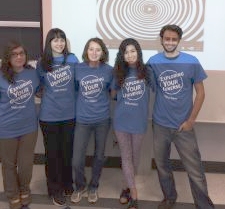
A visual illusion favorite: How can a still image move? What if you saw something, but it wasn’t really there? What if a still image suddenly started moving? Or, if a yellow box was actually brown? Kids and their families were fascinated by the display …

The polyvagal theory is a neurobiological theory relating social engagement, physiology, and developmental outcomes. When I was first learning the theory, I struggled to understand some of the theory’s basic terms and could not find a resource that simplified it. Therefore, this three–part series of articles is intended to serve as an introduction to the theory.
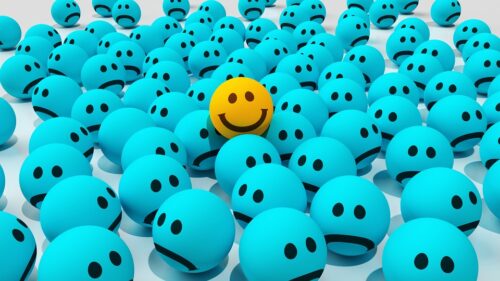
A fundamental aspect of the human experience is undeniably emotion. Love, anger, happiness, fear: these are concepts that we are all intimately familiar with, but their subjective experience can vary widely person to person.