-
Using Evidence-Based Study Strategies to Optimize Your Learning

Students are rarely taught how to study and often choose inefficient study strategies as a result. In this article I discuss what leads students to choose these strategies and offer alternatives backed by research in cognitive psychology and education.
-
Baby Talk: Why your child may not be as chatty as their friends.

Parents and teachers of young children often express fears of a child’s language delay. A missing piece of this conversation is the wide variety of language skills at early stages in development that are all within normative ranges.
-
I’ve Been Thinking about Going to Therapy, Now What?

One of the biggest barriers to people seeking mental health treatment is not knowing how to connect with a therapist. How can you find a therapist? What questions should you ask prospective therapists?
-
Ouch: Understanding the Pain of Social Rejection

Rejection hurts. While we’d all like to avoid this feeling, broken bonds can be as bad for us as broken bones, if not worse. So while the pain of rejection is undesirable, it may actually be helping us effectively modify our behaviors to navigate the world around us.
-
Understanding the Architecture of the Brain: An Introduction to DTI
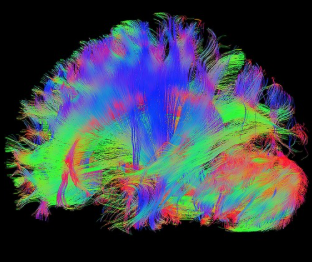
There are many methods for studying the brain, from literally slicing it to look at it under a microscope to injecting radioactive tracers into it to see where a particular neurotransmitter is located. Diffusion tensor imaging (DTI) is a relatively newer approach to studying the brain, but what is this method, exactly?
-
Trying to See it Your Way: The Act of Perspective-taking

Have you ever tried to understand things from another person’s point of view or wished someone would try to see things from your perspective? Perspective-taking research highlights the potential power of engaging in this activity.
-
Why Can’t We Quit Fake News?

We know fake news is bad for us and for society, yet the presence of fake news continues to grow. In this post, I discuss three psychological reasons why we continue to fall victim to fake news.
-
Thinking about Schizophrenia: Evolutionary Explanations

How can debilitating mental illnesses like schizophrenia survive when evolution favors survival of the fittest? Evolutionary psychologists explore ways in which psychosis or psychosis-risk may have been advantageous for our ancestors.
-
Early Adulthood: Changes and Challenges

Early adulthood is a time period in an individual’s life that is characterized by both external and internal changes. What do we know about this stage of development, and why is it important for psychological researchers to continue to explore it?
-
Probing the Mind: Testing the breaking point of neuropsychological assessments

Medicine and psychology intersect more than you would expect. In particular, tests developed based on psychological concepts are used frequently in clinical evaluations to assess different aspects of a patient’s cognitive abilities. However, there are important limitations to these tests that become evident in cases of severe disease. Research has moved towards using neurophysiological methods…