Dan Vy Tang (author) and Karina Agadzhanyan (mentor)
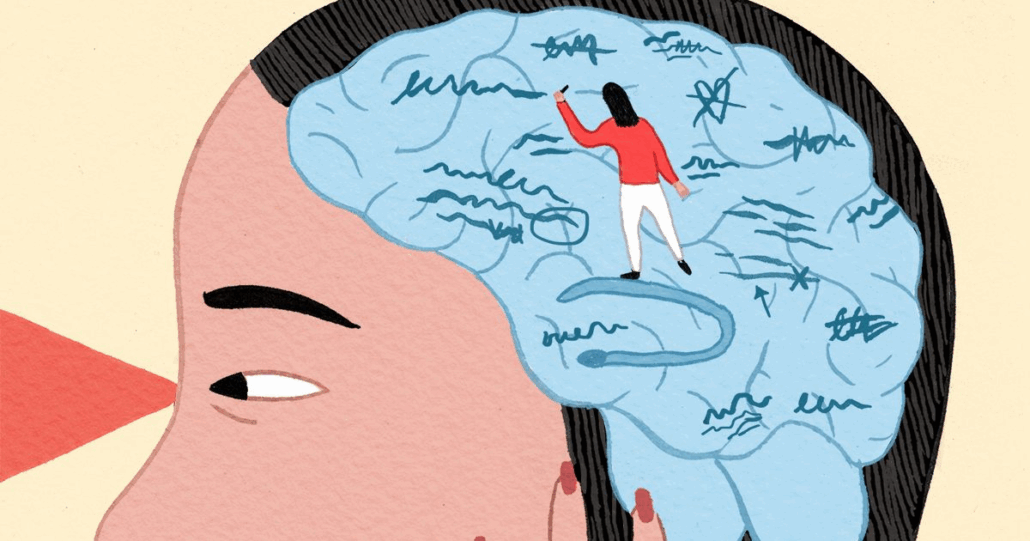
Remember that time you got called up to the board for not paying attention and had no idea how to solve the problem? Or when you thought you were muted on Zoom but weren’t? Chances are, that moment is still burned into your memory as if it’s a record player looping. But why do embarrassing memories have a way of sticking with us forever?
It all comes down to emotion. Moments that make our hearts race feel more memorable and intense in the moment – whether from embarrassment, excitement, or fear. It’s actually the handiwork of our amygdala, the brain’s emotion center that sends signals to the hippocampus, where we store memories and effectively marks the event as important. The plain explanation for why a cringeworthy slip or a first kiss can feel more vivid and long-lasting.
The contribution of physiological response and sleep to memory retention strengthening
Let’s take a trip down memory lane and think back to an embarrassing moment you wish you could forget. Maybe your heart started racing. Your face felt hot. Time seemed to slow down. You may not know, but that intense physical reaction was your system deciding that this moment mattered. It doesn’t take too long for our bodies to react to an impactful event, and that reaction plays a big role in what you will remember later. Research shows that stronger physiological arousal at the moment an experience occurs, such as changes in heart rate or skin conductance, makes information that was marked as emotional more likely to be remembered (Cunningham et al., 2014). This effect becomes even stronger after sleep, as individuals who show higher arousal while viewing negative material tend to remember those emotional details better. Because heightened physiological arousal during encoding “tags” emotionally salient information as important, allowing sleep to play an active role in selectively strengthening those memories over time (Cunningham et al., 2014).
But emotional intensity alone does not fully explain why certain memories refuse to let go. There must be something else at work as memory becomes even stronger when an emotional event catches us off guard. In aversive situations, experiences that violate expectations – like expecting something bad to happen and then being surprised when it does not – are remembered better than equally emotional events without that surprise (Kalbe & Schwabe, 2022). It is not just how bad the moment felt, but also how unexpected it was. The memories that linger tend to be the ones that hit us emotionally and take us by surprise, then settle into our sleeping hearts.
How the amygdala and hippocampus interact during memory consolidation
It’s an important remark that those effects do not come from a single system acting alone. Emotionally impacted memories are shaped through coordination between systems that track importance and the one that stores experiences. Our amygdala and hippocampus work hand in hand during memory consolidation, with one system responding to emotional feelings and the other organizing the details of what happened. When something is identified as emotionally important, this partnership will help strengthen how firmly the experience is stored (McGaugh, 2000). This interaction is not fixed as it changes depending on context, which helps explain why emotion can sometimes sharpen memory and other times distort it (Richter-Levin & Akirav, 2000). Even experiences involving reward or expectation rely on this coordination, showing us that emotional memory is less about a single brain region and more about systems staying in sync when something feels meaningful (Terada et al., 2013). And when that sync happens, the memory becomes harder to shake.
The reason why negative and self-relevant memories are especially hard to forget
If our emotional systems help decide what gets stored, then it makes sense that negative and self-relevant memories would have an advantage. Negative experiences tend to stick because they are emotionally intense and because they signal potential threats. Because our negative emotional memories are more durable over time than neutral ones, especially when the event feels highly significant in the moment (Ritchey et al., 2008). Furthermore, it would be a shame not to include self-relevance, as it adds another layer – consider memories are tied to identity, self-worth, or how we think others see us. There is prior work on voluntary forgetting showing that suppression mechanisms do exist – people can push away unwanted memories through direct inhibition or by redirecting attention elsewhere – but these tend to work best for neutral material, with personally meaningful memories proving far more resistant to being let go (Benoit & Anderson, 2012). Specifically, positive self-related memories tend to resist inhibition the most, holding on even when people try to set them aside, while negative ones can still linger through sheer emotional weight and self-relevance rather than any protective bias (Harris et al., 2010). Whether positive or negative, these don’t feel like neutral records of events; they feel like evidence of something representing who you are.
Rumination and social anxiety
For many people, the hardest part of a negative social experience is not the moment itself, but how often it comes back afterward. When emotionally charged memories keep resurfacing, they feed cycles of worry and rumination – replaying the moment, and reinforcing the fear that the next social situation will go just as badly. This is especially true in social anxiety, where past embarrassing experiences get treated as evidence of how future interactions will go. When someone locks onto a worst-case interpretation – “they went quiet because they hate me” – they’re less likely to feel good afterward, and more likely to keep running the scenario on loop. That loop is what dampens positive feelings and sustains social anxiety (Everaert et al., 2020). A lot of those interpretations trace back to a specific moment, something socially painful from early life that never got updated. A pilot study about the connection between early memories and negative images in people with social phobia found that when they directly revisited and rewrote those memories, they felt less fear of judgment and social situations became not as much threatening (Wild et al., 2008). Worry tends to drive this more than rumination – it’s the stronger mediator between self-focused thinking and anxiety, while rumination sits closer to depression. Still, when either sticks around, distress follows (Raes et al., 2010). These memories don’t stay in the past. They keep shaping what people expect the next interaction to feel like.
A product of adaptation
As annoying as it is when embarrassing memories won’t let go, your brain is not doing this to mess with you. It is actually trying to help! From a survival perspective, remembering moments that are full of emotions makes it easier to spot danger, learn from mistakes, and avoid repeating things that could hurt you (Brosch et al., 2013). Therefore, even if those memories make you “cringe,” it’s not an option to get rid of them since they are part of our body’s system designed to keep you safe. A study on episodic memory showed that emotional memories actually help people learn what is worth choosing again and what is not (Murty et al., 2016). When you clearly remember how something felt and what came out of it, you increase the likelihood of making better choices – for example, double-checking that mic icon on Zoom to make sure that you’re muted. So even though your brain sometimes holds onto things a little too tightly, it is doing its best to look out for you.
References
Benoit, R. G., & Anderson, M. C. (2012). Opposing Mechanisms Support the Voluntary Forgetting of Unwanted Memories. Neuron, 76(2), 450-460. https://doi.org/10.1016/j.neuron.2012.07.025
Brosch, T., Scherer, K., Grandjean, D., & Sander, D. (2013). The impact of emotion on perception, attention, memory, and decision-making. Swiss Medical Weekly, 143, w13786. https://doi.org/10.4414/smw.2013.13786
Cunningham, T. J., Crowell, C. R., Alger, S. E., Kensinger, E. A., Villano, M. A., Mattingly, S. M., & Payne, J. D. (2014). Psychophysiological arousal at encoding leads to reduced reactivity but enhanced emotional memory following sleep. Neurobiology of Learning and Memory, 114, 155-164. https://doi.org/10.1016/j.nlm.2014.06.002
Everaert, J., Bronstein, M. V., Castro, A. A., Cannon, T. D., & Joormann, J. (2020). When negative interpretations persist, positive emotions don’t! Inflexible negative interpretations encourage depression and social anxiety by dampening positive emotions. Behaviour Research and Therapy, 124, 103510. https://doi.org/10.1016/j.brat.2019.103510
Harris, C. B., Sharman, S. J., Barnier, A. J., & Moulds, M. L. (2010). Mood and retrieval‐induced forgetting of positive and negative autobiographical memories. Applied Cognitive Psychology., 24(3), 399–413. https://doi.org/10.1002/acp.1685
Kalbe, F., & Schwabe, L. (2022). Prediction errors for aversive events shape long-term memory formation through a distinct neural mechanism. Cerebral Cortex., 32(14), 3081–3097. https://doi.org/10.1093/cercor/bhab402
McGaugh, J. L. (2000). Memory–a Century of Consolidation. Science. https://doi.org/10.1126/science.287.5451.248
Murty, V. P., FeldmanHall, O., Hunter, L. E., Phelps, E. A., & Davachi, L. (2016). Episodic memories predict adaptive value-based decision-making. Journal of Experimental Psychology: General, 145(5), 548–558. https://doi.org/10.1037/xge0000158
Raes, F. (2010). Rumination and worry as mediators of the relationship between self-compassion and depression and anxiety. Personality and Individual Differences, 48(6), 757-761. https://doi.org/10.1016/j.paid.2010.01.023
Richter-Levin, G., & Akirav, I. (2000). Amygdala-Hippocampus Dynamic Interaction in Relation to Memory. Molecular Neurobiology., 22(1), 011–020. https://doi.org/10.1385/MN:22:1-3:011