A review of “Topological turning points across the human lifespan” (Mousley et al., 2025).
The human lifespan is defined by developmental changes, and our brains are no exception. To define the stages of neurodevelopment, what they entail, and when they occur, a team at the University of Cambridge led by Dr. Alexa Mousley examined human brain structures at different ages.
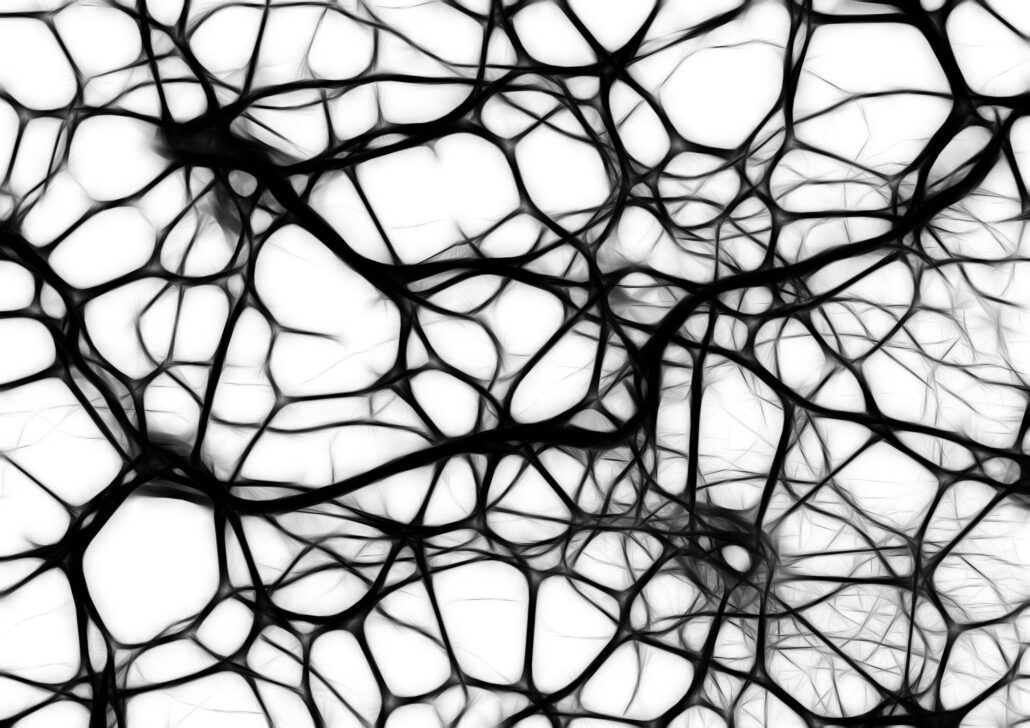
Our brains are composed of billions of neurons which connect with each other in complex networks. Linkages between cells allow communication within a single region, as well as across multiple areas of the brain. In this study, researchers compiled brain data from over 4000 individuals and constructed portraits of neural network structure at every age from 0 to 90. They then compared similarities between neural networks across ages, determined which dimensions could best explain shared versus distinct features between ages, and categorized the network structures unique to each chapter of life. In doing so, Mousley et al. suggest that our neurodevelopmental lifespan can be broken down into five phases: 1) ages 0-9, 2) ages 9-32, 3) ages 32-66, 4) ages 66-83, and 5) ages 83-90.
To better visualize these changes in neural structure, think of the brain as a highly connected globe. Each brain region is a country, and each neuron is a town within that country. Signals passed between neurons allow communication, like a route between towns, and many of these routes webbed together construct a neural network. Some neurons may specialize in specific skills, and connections between them allow us to complete more complicated tasks; just as towns may trade local goods, neurons in a network cooperate to achieve cognitive goals. These neural networks can be bounded within a brain region, but they can also span across cortical zones to send information internationally—across the whole brain. Over the lifespan, our brains learn which neural roads we most often take, and modify available navigational routes accordingly.
In the first stage, from ages 0-9, the brain is characterized by weak, dense neural networks. Children’s neurons are highly interconnected. This version of the brain contains billions of paths linking many towns and countries—even if some paths are only dirt roads. As we learn new information, moving from infancy to childhood, this dense integration decreases.
The second phase, from ages 9-32, includes adolescence and adulthood. Despite turbulent physiological and social changes during this period, the brain is designing itself in the same way throughout this age range. The most frequently used networks are strengthened, as if building highways and railroads; unused neural connections are abandoned. Individual neural regions, like countries, develop deeper connections with their most frequent allies, and clusters of neurons become more locally specialized. Overall, this era represents increasing global efficiency—the brain building faster communication—whilst maintaining networks at a microstructural level.
In later adulthood, from 32-66, we reap the rewards of well-designed neural networks. Connections between individual towns slightly increase, but, overall, structural changes somewhat plateau. The brain runs smoothly, each region maintaining the connections needed to accomplish specialized tasks and to communicate with relevant neighbors.
In stages four and five, from 66-83 and from 83-90, changes in brain structure are less drastic, and primarily accommodate declining neural resources. With neurons weakening or dying—towns no longer providing special skills—networks must adapt. Remaining towns become more connected, and some towns become newly centralized hubs, connecting many regions in the absence of other roads. Individual brain regions deepen their specializations as needed. We respond to the weakening of individual cells by increasing network dependence on remaining functioning cells.
These separate structural seasons suggest a simple truth about our brains: they are always changing to accommodate the physiological resources and personal needs of age, and their structure is reflective of where in the lifespan we are. Moreover, these patterns of change occur in discrete, large chunks, at perhaps unintuitive ages.
While much remains to be discovered about our aging brains, this research implies a fascinating new chronology of life. The contrast between adolescence and adulthood may not be as stark as we believe—the decades between 9-32 are all spent increasing neural efficiency. Spending the first thirty years of life designing our brains allows us to, in stage 3, from ages 32-66, capitalize off our neural success for another thirty years. And, in old age, understanding the brain as an ever-changing structure provides comfort: the neural networks we spent so long building remain, even if pared down. Beyond the exciting scientific implications of Mousley et al.’s work, their results reflect a new understanding of aging: a continual remodeling of our neural world.
Written by Heather Laurel Jensen.