
What role does failure play in learning? While students tend to be aversive to failure, it plays a natural and important role in the learning process.
Today, we talk about the National Science Foundation and our experiences with applying for fellowships and working with the NSF.
Today we are joined by Dr. Janet Tomiyama from ucla to talk about the issues that prevent dieting success, including stress and stigma.
Today, we are joined by Dr. Jennifer Silvers from UCLA to talk about emotional regulation and early life stress.
We had a discussion today with Dr. Adriana Galvan about how studying adolescent brains and the implications it has on how we understand risk taking.

Do you learn better by your eye or ear? Research has shown that memory is better for information we learn visually than aurally. Yet, to ensure optimal learning one must consider the use of multisensory integration, or the simultaneous use of both visual and auditory aids.

Have you ever tried to predict the grade you would receive on an exam? If so, how did you do it? The answer is through metacognition. We discuss strategies students can employ to improve metacognitive accuracy and subsequent memory performance.
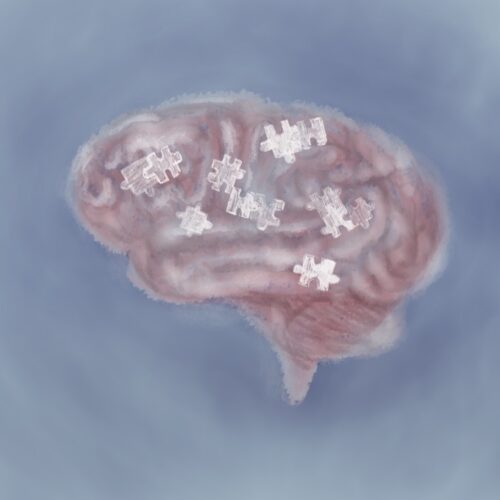
Is forgetting a bad thing? On the contrary, scientific research showed that forgetting is actually beneficial for your memory and learning!

Did curiosity really kill the cat? The idiom “curiosity killed the cat” warns against the danger and misfortune that one’s curiosity can bring, but it turns out that curiosity is more beneficial than you might think.

Have you ever been in a situation in which you recognize someone but cannot quite recall their name? Or do you have a grandparent who struggles to remember names? We describe evidence-based techniques that could be used to enhance your memory for names.

The recent opioid epidemic has caused society to re-evaluate our current pain management practices. This article explores a unique option, music therapy, as a potential new treatment.

Why does [insert your name here] feel this way? ‘Distancing’ yourself from the situation when you reflect on negative past events might be an easy way to make you feel better. A recent study demonstrated that distanced self-talk decreased negative feelings about a wide range of memories, and across a variety of people.

Our memories ultimately determine who we are in the present; however, even our shared experiences are subjective, especially because such memories become distorted over time. But why does this happen in the first place?

Are you looking for a new drink to start your day? There are many different types of tea that offer a wide range of psychological benefits. When provided with the research, you can choose the teas that will offer the most improvements to your life.

A common but seldom named task is the basis of several modern

Our ancestors evolved alongside friendly microbes. Today, many of these “old friends” have disappeared from our lives. Can we return to the microbial landscape of our past – and should we?

Don’t forget to prioritize your mental health. Studies have shown that long-term anxiety and depression predicted more deficits in working memory abilities, which is related to lower academic performance.

The decision to take a gap year before graduate school can be a tough one. There are many benefits of a gap year and also countless obstacles to taking one. Either way, make sure you make the right choice for you!

Rosy retrospection is the tendency for an individual to evaluate the past more favorably than the present. When the passage of time allows people to recall events through a rosy lens, this may be an adaptive process to maintain well-being.
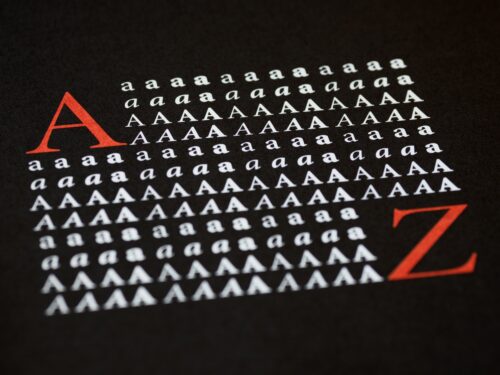
An investigation into the effectiveness of Sans Forgetica, a font created to be intentionally difficult to read to engage readers and potentially improve recall ability.

Colors play an important role in data visualization. They can enable an elegant, easy-to-read visualization, but can also confuse viewers when used incorrectly. Read about how to better use colors for your next visualization here.