Leah Alkalay (author) and Ashley Chen (mentor)
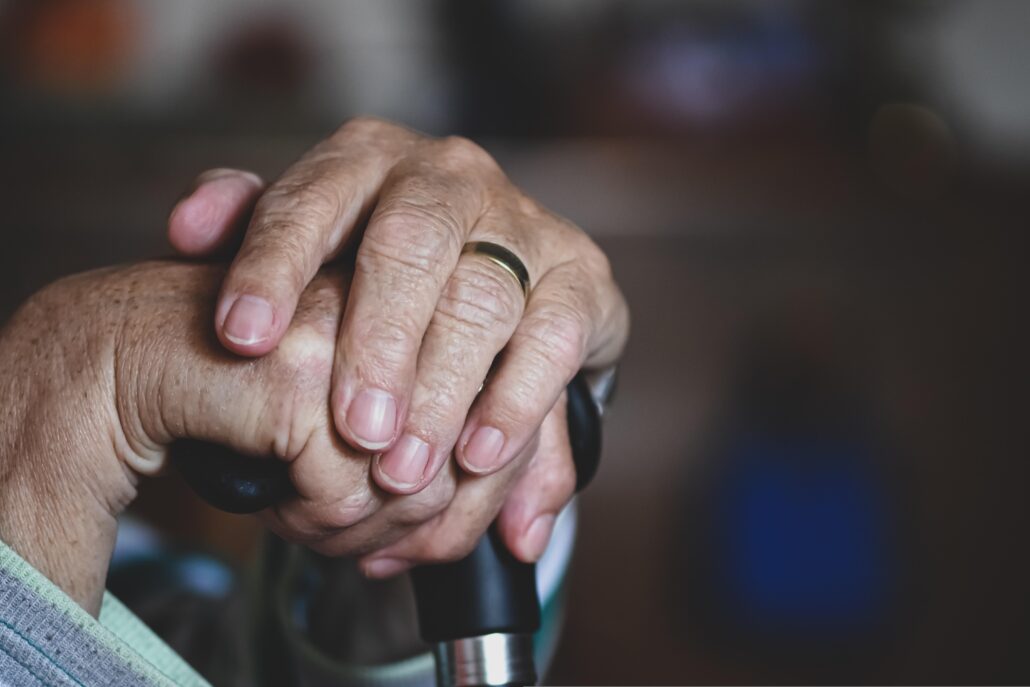
As we grow old, we will inevitably face a difficult question: what will happen when we can no longer take care of ourselves? For some, family members might be able to help preserve a sense of independence, but for many there comes a point where the only remaining option is a nursing home.
When we picture these places, a specific image often comes to mind—people sleeping in wheelchairs, quiet halls with the occasional beep of monitors, and the sterile smell of disinfectant. Days are repetitive and structured, with residents assembling puzzles and eating meals at the same set times. In his book Being Mortal, Dr. Atul Gawande notes that most people find the thought of living in nursing homes so unpleasant that they simply put off the decision until a crisis leaves them no choice (Gawande, 2014). The Eden Alternative model suggests that the primary suffering in these facilities isn’t physical disease, but a state of biological and social deprivation. The model works to address this by moving beyond traditional medicine to focus on environmental interventions that restore a person’s sense of purpose.
The Three Plagues of Modern Medicine
Throughout his book, Gawande highlights the work of Dr. Bill Thomas, who argues that traditional medicine often fails the elderly by treating nursing homes like hospitals instead of a home. While these facilities focus on physical safety, they often neglect the fundamental human need for purpose. Thomas identifies this failure as the “Three Plagues” of boredom, loneliness, and helplessness. He describes boredom as the lack of variety that produces a flat state of emotions, whereas loneliness is a sense of isolation whereby people feel forgotten. Finally, helplessness is the loss of agency that occurs when one continuously receives care but never provides it in return.
To combat these plagues, Thomas launched a project in 1991 called the Eden Alternative at the Chase Memorial Nursing Home. It was a radical experiment that placed 100 parakeets, dogs, and cats in the sterile nursing home environment to provide unconditional love to the residents and combat loneliness. Plants and gardens were cultivated to create a vibrant living environment, with residents helping to care for them. Finally, intergenerational interaction was fostered through regular visits from school children and on-site daycares (Gawande, 2014). The facility transformed from a place of quiet medical care to a lively hub, enriched by the presence of children and animals wherever one turned. These interventions helped residents find a new sense of purpose in their lives, whether it was helping to create a thriving garden or passing on their wisdom to the next generation.
How Can Animal Therapy Combat the Three Plagues?
In the clinical settings of a typical nursing home, life is highly structured, which can be emotionally unfulfilling. There are various activities for residents to participate in, yet they lack the spontaneity and unpredictability of real life. This can lead to “cognitive stagnation,” whereby the brain stops forming new memories because nothing new or notable happens. However, animals are very unpredictable. Their spontaneous excitement or sudden urge to play can trigger dopamine in the brain, which acts as a chemical reward. This stimulation makes it easier to stay alert, focus, and process what is happening in that moment.
The second plague of medical care for the elderly is loneliness. Of course, nursing homes strive to keep their residents connected with each other and staff, but loneliness is not necessarily only caused by physical isolation. It can also stem from the feeling of being unneeded. Residents are always the recipient of care in a nursing home, which creates a one-way relationship. Animals, on the other hand, offer non-judgmental companionship. A dog doesn’t care if you repeat the same story ten times; they only value your presence.
These interactions may do more than just lift spirits; they may also lower activity in the amygdala (the brain’s fear center) and increase oxytocin levels (Beetz et al., 2012). Oxytocin is sometimes called the “cuddle hormone” because it is the chemical the brain releases during bonding, helping us feel safe and connected to others. This reduces the social pain of isolation and lowers chronic inflammation, which is known to accelerate dementia (Cacioppo & Cacioppo, 2014).
The final, and arguably most devastating plague is helplessness, which is constituted by a loss of agency. It is easy to feel like a passive recipient of medical care when you cannot make the meal you want or set your own bedtime. The Eden Alternative allows residents to shift from “care-receiver” to “care-giver” by assigning them the responsibility of taking care of the animals.
Caring for a living thing has been shown to engage the prefrontal cortex, the brain area responsible for planning and complex decision-making. The act of caretaking is thought to maintain “cognitive reserve,” keeping high-level brain circuits active and enhancing resilience against age-related biological decline (Stern, 2012).
The Effects of Animal Therapy on Stress and Anxiety
When a senior suffers from any of these three plagues, it triggers the Hypothalamic-Pituitary-Adrenal (HPA) axis, which is our body’s system of stress response. Sometimes a burst of stress is adaptive for survival (the fight or flight response), but chronic loneliness can cause this system to remain active indefinitely. This may lead to hypercortisolemia, a constant flood of the stress hormone, cortisol, which prevents the brain from entering a rest-and-repair state and leaves it in a state of exhaustion (Lupien et al., 2009).
This can be particularly dangerous for the brain’s memory center, the hippocampus. This area has many receptors for stress hormones, which makes it especially sensitive to cortisol. High levels of this hormone can even cause dendritic atrophy, whereby the branches of your brain cells shrink, and stop the birth of new neurons (McEwen, 1999; Sapolsky, 2000). As a result, there is usually a measurable decrease in brain volume, which is a key factor in Alzheimer’s disease and depression. Animal-assisted interventions can do more than just cheer people up. By increasing oxytocin and reducing cortisol (Beetz et al., 2012), they may help protect the hippocampus from the physical effects of chronic stress (Sapolsky, 2000).
These interactions with animals can also be seen as a biological shield. Even just 15 minutes of petting a dog can trigger a spike of oxytocin, a neuropeptide that acts as a natural anti-anxiety drug (Handlin et al., 2011). Oxytocin reduces the flow of cortisol, allowing the hippocampus to have a window of recovery and acting as a chemical shield against environmental stress.
Sundowning and Deprescribing
The results of the Eden Alternative showed a staggering 50% reduction in psychotropic drug use (Gawande, 2014). Instead of sedating agitated patients with high-risk drugs that may cause strokes or falls, Thomas treated the root cause of the problem. Conversely, some studies, like the Coleman study, found that these results were difficult to replicate over the long term. While the original Eden Alternative transformed the culture and environment of the nursing home, the Coleman study found that simply putting animals in a facility without addressing resident-staff interactions did not produce the same benefits. Yet, Thomas’s initial findings suggested a powerful “will to live” effect (Coleman et al., 2002), a biological and psychological boost in health that occurs when a person believes they have a sense of purpose and feel needed by others.
This could be especially helpful for sundowning, the late day agitation dementia patients often feel as their cognitive resources begin to run low. Animals provide a sensory grounding experience that can reset the emotional state of a patient, preventing confusion from becoming a psychiatric crisis. As a result, we can treat animal therapy as a targeted clinical intervention that may support deprescribing, the supervised reduction of harmful or no-longer-needed medications. Just as a doctor would prescribe medicine for high blood pressure, a psychiatrist could be able to “prescribe” animal interaction to combat social isolation and increase brain protection.
Conclusion
In medicine, an intervention is only as good as its delivery. Unlike a pill, animal therapy lacks a standardized dosage. Research is still ongoing to determine the optimal amount of exposure and how an animal’s temperament may affect outcomes. Clinicians must also be cautious in prescribing animal therapy, as animals may introduce risks like allergies or falls (Coleman et al., 2002) and the animals themselves may experience burnout in high-stress environments (Glenk, 2017).
Cognitive decline is often framed as an inevitable unraveling of our biological mechanisms, but the brain is not an island. It is an organ influenced by its environment. Boredom, loneliness, and helplessness are not just feelings, but rather biological toxins. The future of medicine must treat the whole person by considering not only clinical interventions in the form of a pill, but also those interventions that may be on a leash. As Dr. Gawande reminds us, our job is not just to ensure survival, but to enable a life worth living.
References
Beetz, A., Uvnäs-Moberg, K., Julius H., Kotrschal, K. (2012). Psychosocial and psychophysiological effects of human-animal interactions: The role of oxytocin. Frontiers in Psychology, 3(234). https://doi.org/10.3389/fpsyg.2012.00234
Cacioppo, J. T., & Cacioppo, S. (2014). Social relationships and health: The toxic effects of perceived social isolation. Social and Personality Psychology Compass, 8(2), 58-72. https://doi.org/10.1111/spc3.12087
Coleman, M. T., Looney, S., O’Brien, J., Ziegler, C., Pastorino, C. A., Turner, C. (2002). The Eden Alternative: Findings after 1 year of implementation. The Journals of Gerontology Series A, 57(7), M422-M427. https://doi.org/10.1093/gerona/57.7.m422
Gawande, A. (2014). Being Mortal: Medicine and What Matters in the End. Metropolitan Books.
Glenk, L. M. (2017). Current Perspectives on Therapy Dog Welfare in Animal-Assisted Interventions. Animals, 7(2), 7. https://doi.org/10.3390/ani7020007
Handlin, L., et al. (2011). Short-term cortisol and oxytocin responses to dog-owner interactions. Anthrozoös, 24(3). 301-315. https://doi.org/10.2752/175303711X13045914865385?urlappend=%3Futm_source%3Dresearchgate.net%26utm_medium%3Darticle
Lupien, S. J., et al. (2009). Effects of stress throughout the lifespan on the brain, behaviour and cognition. Nature Reviews Neuroscience, 10, 434-445. https://doi.org/10.1038/nrn2639
McEwen, B. S. (1999). Stress and hippocampal plasticity. Annual Review of Neuroscience, 22(1), 105-122. https://doi.org/10.1146/annurev.neuro.22.1.105
Sapolsky, R. M. (2000). Glucocorticoids and hippocampal atrophy in neuropsychiatric disorders. Archives of General Psychiatry, 57(10), 925-935. https://doi.org/10.1001/archpsyc.57.10.925
Stern, Y. (2012). Cognitive reserve in aging and Alzheimer’s disease. The Lancet Neurology, 11(11), 1006-1012. https://doi.org/10.1016/s1474-4422(12)70191-6