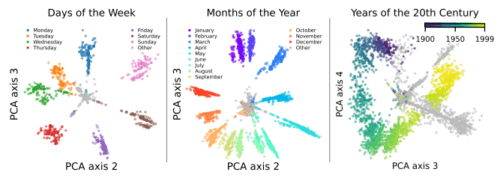
We argue that AI represent concepts in various geometries.

For decades, exercise science treated fatigue like a simple mechanical failure, similar to a car running out of gas. However, fatigue isn’t a barrier. Rather, it’s an emotional boundary set by your brain to protect your body’s vital organs.

Maybe it’s the opening chord of a song you haven’t listened to since graduation or the smell of a meal your mom used to cook. These aren’t just vague recollections, they’re flashbulb moments that trigger an immediate psychological shift. Why do we recollect these memories from our youth with such vividness? And how do these help us navigate the stressors of the present?

As we age, memory becomes more selective and value-directed, focusing on information that matters most. The aging brain increasingly prioritizes high-value, goal-relevant information, directing attention and cognitive resources toward what is most important. These changes highlight the adaptive nature of human memory and suggest that aging is not something to fear. Memory remains flexible, continually adapting to the evolving goals, priorities, and demands of later life.

According to the Eden Alternative model, the primary suffering in nursing homes isn’t physical disease, but a state of biological and social deprivation. This article discusses how animal therapy may help combat boredom, loneliness, and helplessness in these facilities.

When a child is raised in a high-stress environment, a biological process called “adaptive calibration” may occur, which causes the child’s social memory to prioritize survival-related information. This specialization acts as a trade off whereby the brain sacrifices the ability to perceive subtle social cues, like boredom or humor, in exchange for the rapid detection of potential aggression.

What happens when “eating healthy” goes too far? This blog post discusses Orthorexia Nervosa as an emerging pattern where the pursuit of clean eating can become obsessive and harmful. Research suggests it’s tied to factors like perfectionism, body image concerns, and even social media habits—especially platforms like Instagram. As the line between wellness and obsession blurs, understanding orthorexia can help us rethink what truly counts as a healthy relationship with food.

This paper examines how childhood trauma affects brain structure and function, with lasting consequences for emotional regulation, memory, and stress response. It argues that adverse childhood experiences can alter key brain regions such as the amygdala, hippocampus, and prefrontal cortex, increasing vulnerability to mental health challenges later in life. At the same time, the paper highlights neuroplasticity as an important pathway for recovery, emphasizing the potential of both medical and behavioral interventions. Overall, it shows that supportive relationships, therapy, and targeted treatment can play a critical role in helping individuals heal from early trauma.
A review of “Topological turning points across the human lifespan” (Mousley et al., 2025). The human lifespan is defined by developmental changes, and our brains are no exception. To define the stages of neurodevelopment, what they entail, and when the …

Dan Vy Tang (author) and Karina Agadzhanyan (mentor) Remember that time you got called up to the board for not paying attention and had no idea how to solve the problem? Or when you thought you were muted on Zoom but weren’t? Chances are, that moment i …

As AI adoption becomes increasingly widespread, researchers have been exploring how people develop human-like attachments to AI, which has both beneficial and risky implications.

Some of us spent our childhood building forts in the woods with our siblings and knowing the full history of everyone in our town. Others spent their early days with endless activities to choose from and the constant sound of police cars and ambulances whizzing by. These very different environments shape the world we know, but how much do they also shape us?

From cigarettes to vaccines, people moralize behaviors that seem to cause harm.

Do you have midterms or final exams coming up? We’ll go through a few different types of studying scenarios together to truly answer the question: How can you optimize your study sessions this semester? Spacing Effect: How often you study matters 1. St …

Have you ever done your assigned reading and thought, “I’ll definitely remember this, it’s in HUGE, BOLD LETTERS” and then failed to recall anything on your quiz the next day? This feeling of disconnect between what we think we know and what we actually know can be explained by the human ability to monitor and control our own learning, also known as metacognition.

How limited is our working memory capacity? While often described as fixed, research shows its boundaries depend heavily on the factors present during encoding and retrieval. Under the right conditions, we may be able to surpass what once seemed like hard limits.

When remembering a moment in life, does it ever feel shorter or longer than what actually occurred? Research shows that our brain’s chemistry might unlock the secret to why this is, and how that influences our memory of the event later on.

In this paper, we discuss how socioeconomic status (SES) influences child development through poverty’s interaction with stress, caregiving, and neighborhood context. We highlight evidence that toxic stress, reduced caregiving quality, and neighborhood disadvantage impair brain development, while policy interventions such as financial assistance can buffer these effects and promote healthier developmental trajectories.

In this blog post, we explore how cross-cultural differences impact the diagnosis and treatment of Autism Spectrum Disorder (ASD). While early intervention is key, cultural beliefs, stigma, and systemic disparities often delay diagnosis for children from non-white and minoritized communities. By examining global perspectives and research, this post highlights the need for culturally responsive approaches to ASD care.

Why do we choose not to tell other people information about ourselves? When is it “trauma-dumping” and when is it being friends?
In this article, I discuss four principles of analogy-based learning and teaching in the classroom that are crucial for students’ success in analogical reasoning.