-
Psychological Science Is Not Broken — It’s Maturing

At approximately 150 years of age, psychological science is an infant among elders. For someone like myself, this is precisely what makes psychological science so invigorating. We stand on the shoulders of giants in scientific history, but we are also in unchartered waters.
-
Highlights of “Building Minds”
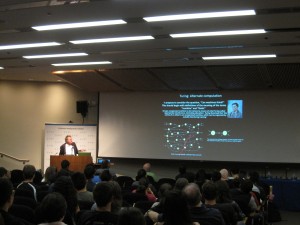
For those who missed “Building Minds: Microchips & Molecules”, here is a taste of the action. For all who packed the CNSI auditorium in May for our annual interdisciplinary symposium, here is a quick trip down memory lane. Enjoy! Gimzewski (’15 symposium) UCLA’s James Gimzewski cited Alan Turing in his talk describing his research on…
-
Signal Detection: Decision Making in Uncertainty
We all experience uncertainty: How did I do on that test? What do they think of me? Where did I leave my keys? Is my phone ringing? In these and other uncertain situations, we have to take the evidence we have and make our best guess about the answer. Sometimes we’re right, and sometimes we’re…
-
How to Take Good Notes: Go Low-Tech

More and more students are opting to take notes on laptops to save trees and – they assume – take better notes. But is this assumption correct? According to the findings UCLA’s Dr. Danny Oppenheimer recently published in Psychological Science , these students are wrong: in a study of note-taking comparing handwritten to typed notes, Meuller…
-
How do we see so many colors on a digital screen?
How can we possibly perceive a world of colors from just red, green, and blue, the colors of lights in TV, computer, and phone screens? The answer has to do with the way our visual system is set up: We have three different kinds of cones in the retina which respond most to what we…
-
What’s the Deal with Replication?

Wondering what the fun and fascinating stories were in the world of Psychology on Twitter this week? Let me tell you! The Psychology Twittersphere has been full of thoughts about a very important topic lately: Replication. If you remember back to your first science classes, replication is a key part of the scientific method! In…
-
A New Direction in Autism Research: Google Cloud

Autism is everywhere and it is great! I’m not referring to the recent CDC estimate that 1 in 68 children in the U. S. are diagnosed with the disorder. Instead, I’m talking about its presence in the news. Most recently, I’ve read that the Vatican is holding an inaugural conference on autism, “The Person…
-
Awe: Why It’s Important, and How to Feel It

Jason Silva – Shots of Awe Have you ever gazed up at the starry sky and felt amazed by its vastness? Or have you looked over the abyss of the Grand Canyon and found your breath catch in your throat? If so, you probably felt awe, a “feeling of wonder and astonishment experienced in the presence of…
-
What is color (in vision)?

Roses are red, Violets are blue, And you probably think That the sky is blue too. Color, however, exists only in the mind: Color is our experience that maps onto the physical luminance properties of visible light and visible-light reflectance properties of objects. Psychologists call this color perception, to recognize that color is more a property…
-
Women in science: Yes we can!
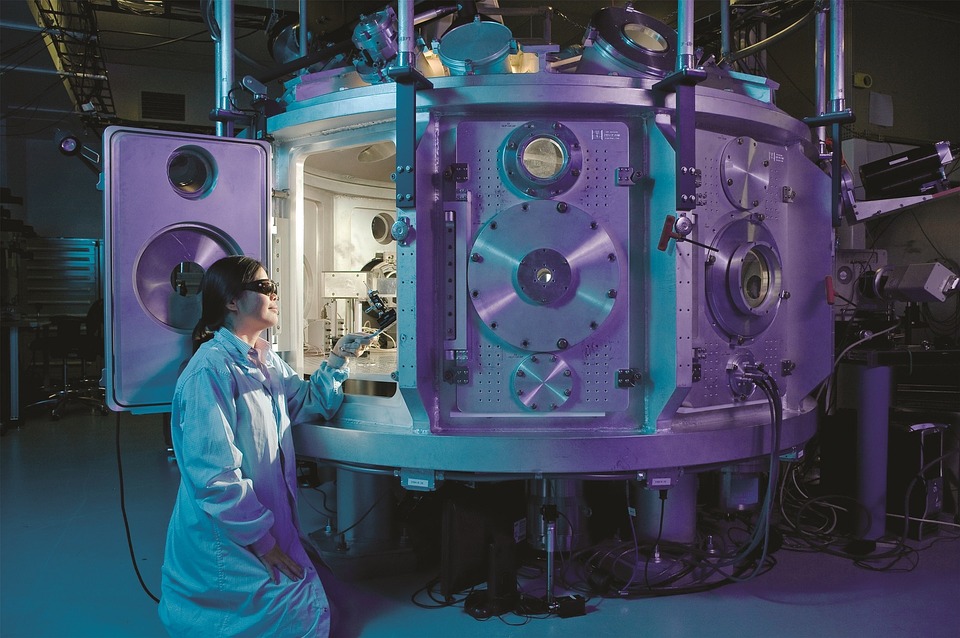
The cover of my statistics text book features a diagram depicting the relation among sex, time since obtaining a doctorate degree, number of publications, and citations on salary. I haven’t formally learned about structural equation modeling just yet, but nonetheless found it rather discouraging for women. In hopes of being potentially proven wrong, I read…